

Most organisations have workflow debt and don’t know it yet. The tools are working. The technology is genuinely capable. But when AI gets layered onto broken processes, the results are underwhelming – and the investment is wasted.
What is workflow debt?
Like technical debt in software development, workflow debt is the accumulated complexity that builds up in any organisation over time. The unnecessary approvals. The meetings that exist because they’ve always existed. The handoffs between teams that nobody has ever questioned. The exceptions that became standard practice.
Humans are remarkably good at working around broken processes. AI agents are not.
Most organisations carry enormous amounts of it. And most have no idea – because humans are remarkably good at working around broken processes.
AI agents are not.
The UK banking business NatWest Group applied exactly this logic – reducing a 60–100 day process involving more than 40 people to a single day. Not by adding AI, but by replacing the process entirely first.
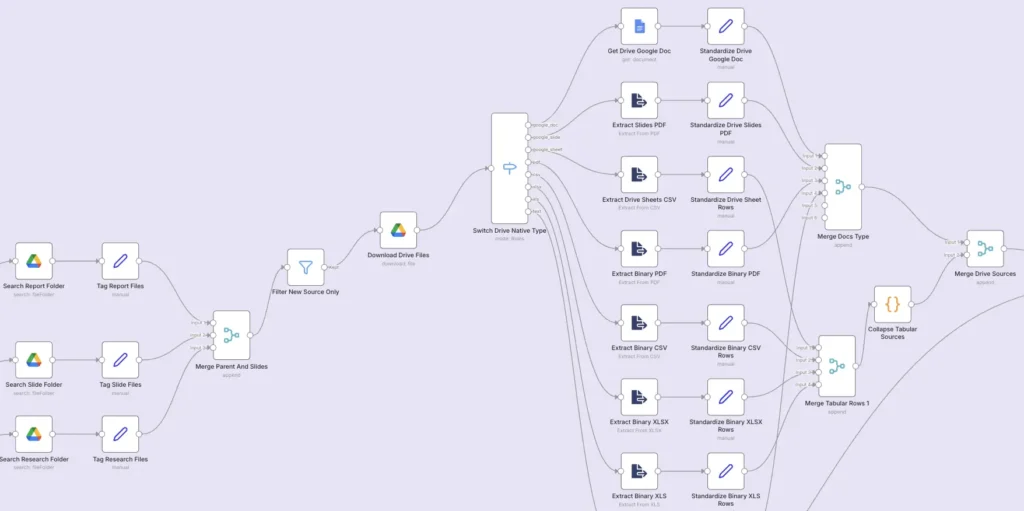
Above: Komosion n8n workflow excerpt for an AI agent
The same principle applies at any scale
The same logic holds whether you’re running a $50 million professional services firm, a regional hotel group, or a government-adjacent utility. The scale is different. The debt is the same.
The organisations seeing real returns aren’t the ones who moved fastest to adopt AI tools. They’re the ones who cleaned the process before they automated it – and redesigned the workforce at the same time as the workflow, rather than treating people as a downstream change management problem.
Before you scope the AI, scope the process.
- Map the process end-to-end: every handoff, every approval, every person who touches it. If you can’t draw it, you can’t automate it.
- Find the places where a human is pressing a button that a rule could trigger. These are the easiest wins – and the clearest sign of accumulated debt.
- Hunt for the exceptions that became standard practice. That’s where the debt is heaviest, and where AI will fail fastest if you don’t deal with it first.
- Ask what should stop entirely before you ask what AI should do. Not everything worth automating is worth keeping.
- Decide where human judgement is genuinely irreplaceable – then design for it deliberately, rather than leaving people in the loop by accident.
The organisations that will win with AI aren’t moving the fastest. They’re moving the most deliberately. The debt was always there. AI just made it more expensive.
Planning for AI?
Komosion works with organisations to map and resolve workflow debt before any AI investment is made. To talk through what that looks like for your business, get in touch.